A dated account of his health. Veterinary findings below are from May 2025; the latest family update is from September 2026. Dates refer to the events described, not to a current treatment plan.
Page reviewed
01 / His story
Getting to know Mochi.
Mochi is a male, white miniature Pomeranian, born on 30 March 2024. His family has been keeping track of his health since he was a puppy.
Unusual movements, noisy breathing, urinary difficulties and changes in his coat led to specialist investigations. Several congenital differences were found, but they do not fully explain every symptom.
This is his family’s account of that journey, drawing on a veterinary report and observations at home. It is not a clinic publication or a treatment guide.
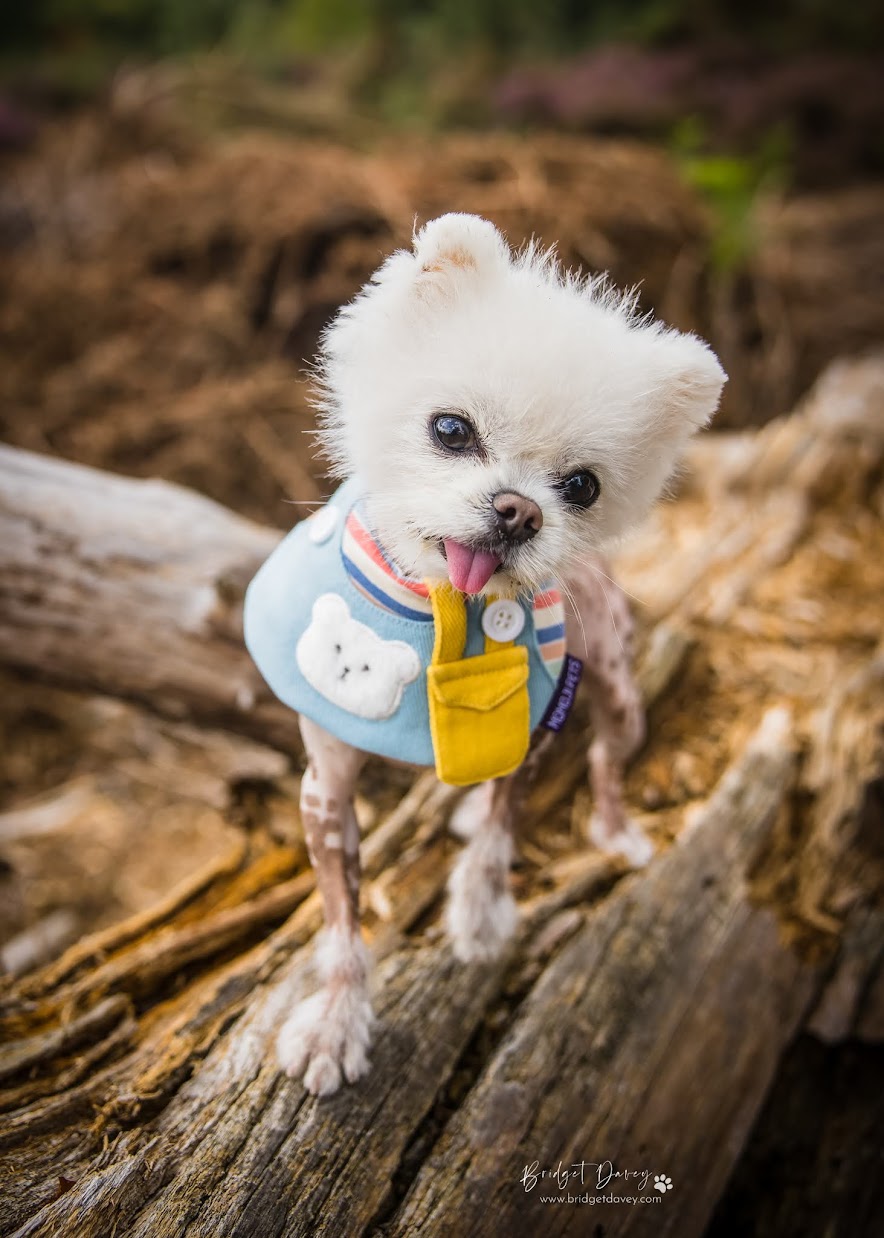
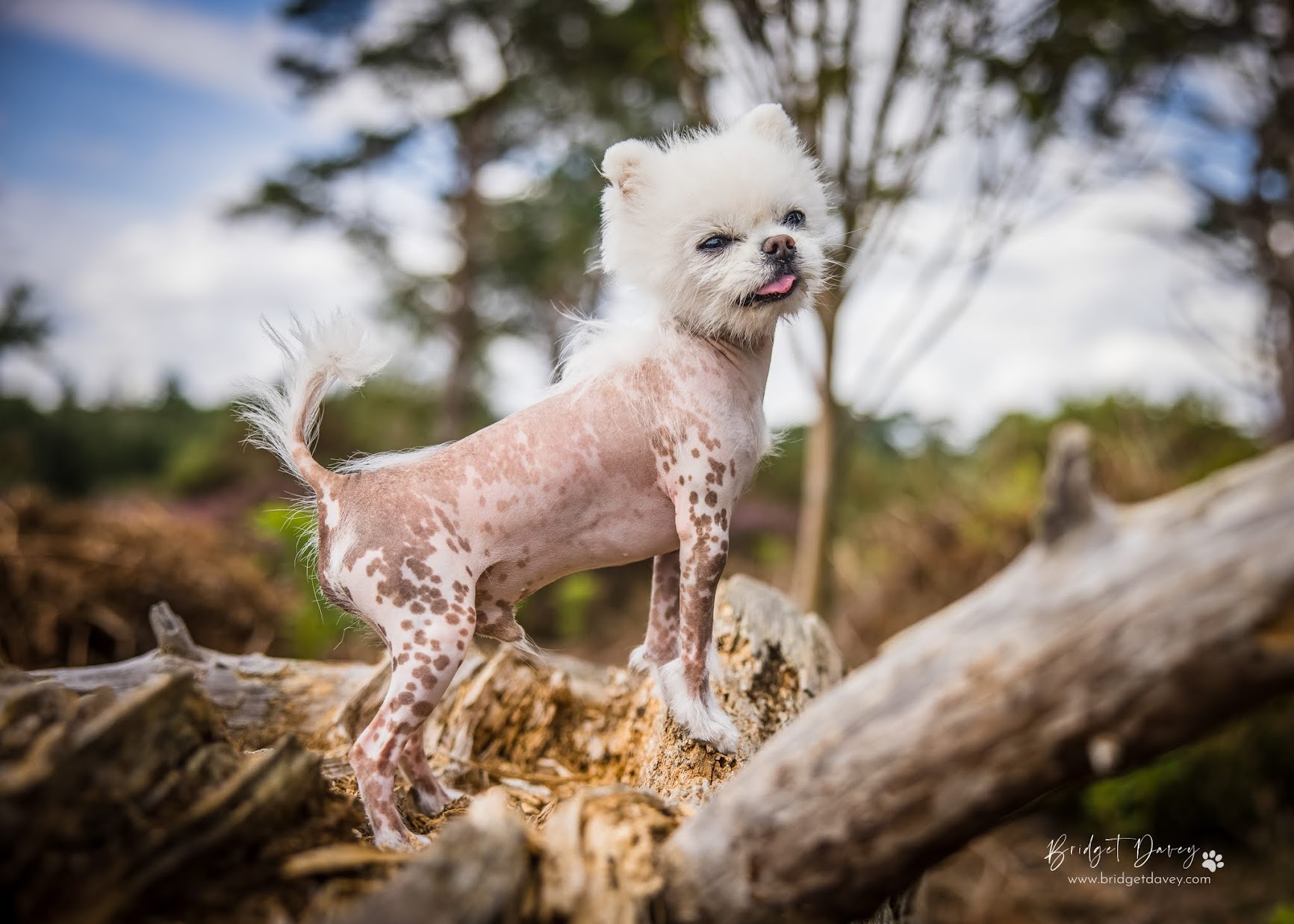
Mochi, out in the woods. Photographs by Bridget Davey.
02 / Health notes
What the investigations found.
Seen at DWR on . Report dated .
Possible hepatic dysfunction
No large liver shunt was seen.
CT found no evidence of a macroscopic portosystemic shunt: an abnormal large blood vessel bypassing the liver.
DWR considered another form of liver dysfunction possible, such as portal vein hypoplasia without portal hypertension, because some signs had improved with treatment.
The report did not confirm microvascular dysplasia (MVD). An elevated bile acid result alone cannot establish that diagnosis.
Recorded in the May 2025 referral report. Values in µmol/L; exact test date not given.
Before food3.2
Within the lab range of 0.1–5.0
After food63.6
Above the lab range of 0.1–10.0
03570
Mochi’s resultLab reference range
These are historical results, not a measure of his liver function today.
01
Breathing & airways
Severe nasal septum deviation and a moderately elongated soft palate were recorded. DWR considered his airway shape and brachycephalic obstructive airway syndrome (BOAS) the likely explanation for his respiratory signs.
Several skull sutures had not fused, leaving open fontanelles. Imaging also showed an enlarged opening at the skull base, mild kinking of the brainstem and a malformed tail vertebra. Their role in his symptoms was uncertain; further imaging was discussed.
03
Teeth & jaw
Teeth were crowded, rotated or distorted, with retained baby teeth and missing adult teeth. DWR thought the dental changes could cause discomfort and reduced appetite. The jaw-shape changes were considered likely incidental.
04
Urinary tract
Small mineralised areas in the left kidney and bladder were interpreted as stones. Calcium oxalate was a possibility, not a confirmed stone composition. The May urine sample showed no evidence of infection or inflammation.
05
Coat & skin
Symmetrical hair loss remained unexplained. Alopecia X was a possibility in the report; it was not a confirmed diagnosis.
06
Other recorded findings
Both testes were in the abdomen at the time of CT. Both kneecaps were prone to slipping out of place. These describe the May 2025 examination, not his current surgical or neutering status.
Symptoms and other results recorded in May 2025
Reported before referral
Pacing, circling, behaviour changes and sudden head jerks.
Vomiting, drooling, reduced appetite and excessive licking.
Increased drinking, frequent urination and difficulty emptying the bladder.
Noisy breathing, sneezing, hair loss and occasional hind-leg lameness.
These were historical observations, not proof of a single cause. Several signs were not seen during his hospital stay.
At the specialist visit
Mochi was bright and responsive, weighed 1.8 kg, and had a body condition score of 4/9.
Routine blood tests had no significant abnormalities. Fasting ammonia was within range at 29 µmol/L. His neurological examination was normal apart from an inconsistent menace response.
The IGF-1 result did not support dwarfism, and the dexamethasone suppression test did not support hypercortisolism.
03 / Over time
The story since then.
Later events are dated family reports and record summaries. They do not replace a written specialist assessment.
November 2024
A trial of treatment
Lactulose, amoxicillin-clavulanate and a hepatic diet were started for suspected liver dysfunction. DWR later recorded improvement in drinking, urination and head-jerking signs.
May 2025
A more complicated picture
The DWR investigation found multiple congenital differences and no visible large liver shunt. Several explanations and follow-up tests remained open.
March–July 2026
Recurrent right-eye problems
A right-eye episode in March was followed by a recurrence in late June. The family reported attending Granta’s eye specialist on 9 July, where a dental or orbital cause was discussed. A formal written conclusion was not available for this review.
August–September 2026
Gradual recovery after a fall
A fall from the sofa on 4 August was followed by a separate left-eye injury. The family described slow improvement, with swelling below the eye taking about five weeks to become barely visible.
At a recheck on , the vet was reportedly not concerned and advised allowing it to heal. This recovery update was provided by the family on ; it is distinct from the earlier right-eye episodes.
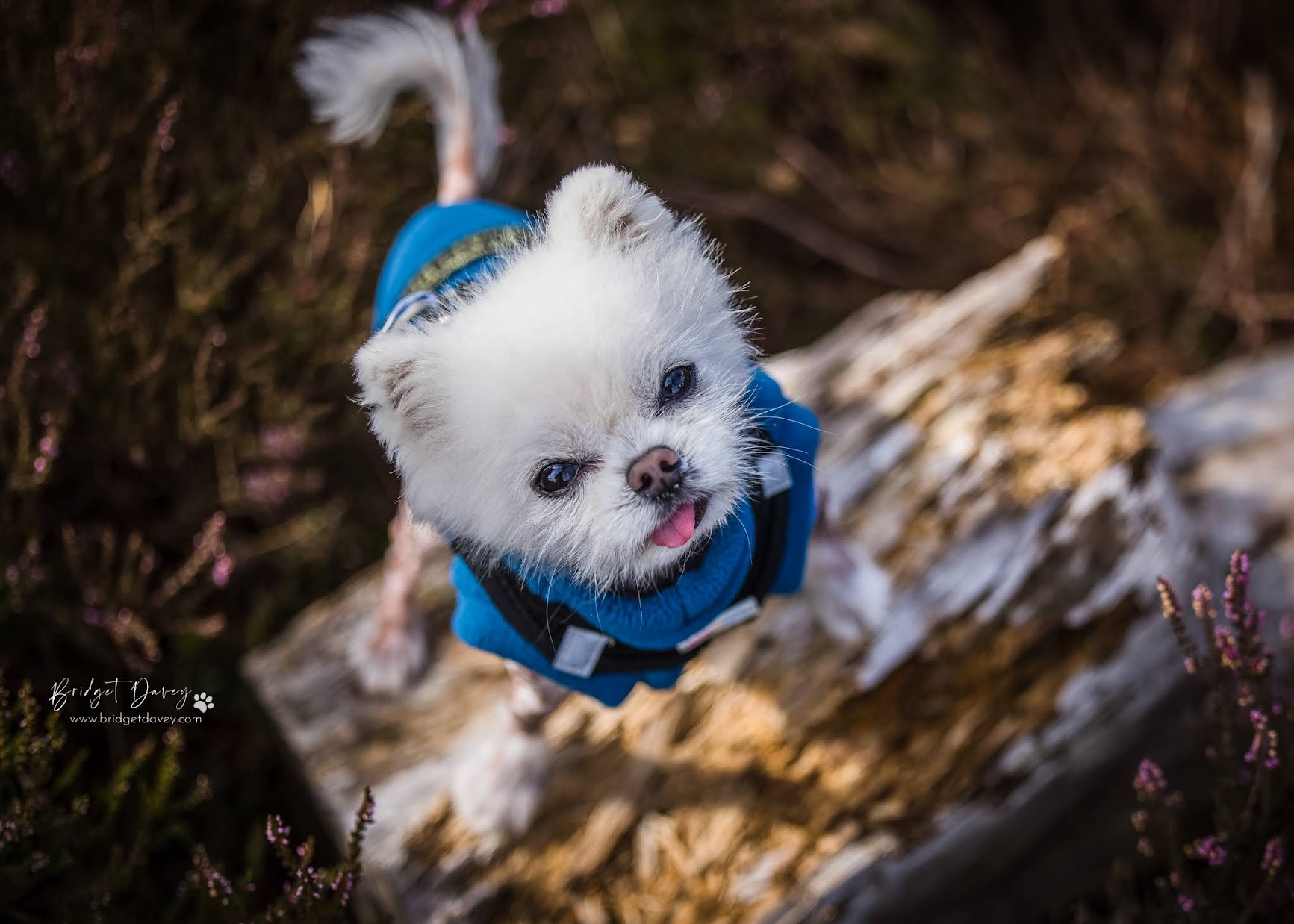
Another side of Mochi, photographed by Bridget Davey.
04 / Care history
Care changes. Dates matter.
The records describe several different treatment plans. This page does not provide a current medication list or dosing instructions.
May 2025 discharge
DWR advised continuing lactulose as needed, stopping amoxicillin-clavulanate, and considering alternative foods. Pain relief and anxiety medication were prescribed for use as needed.
Later records and family updates
Later prescriptions and 2026 family notes show that Kesium (amoxicillin-clavulanate) was used again. The July family form also listed lactulose, melatonin and several renal or hepatic foods. These are dated reports of use, not verified instructions for today.
Follow-up results
Repeat bile acids, vitamin B12 and a urine protein-to-creatinine ratio were pending when the May 2025 report was written. Their later results were not available in the material reviewed.
Diet and medication need to follow Mochi’s treating vet’s current advice. Food choices and protein levels are individual to his needs.
About these notes
The clinical summary is based on a family-supplied transcription of DWR Veterinary Specialists’ report of 17 May 2025. Birth-date information comes from Pet Practice history. Later updates come from family notes, record summaries and the family’s recovery update of 14 September 2026.
General wording was checked against the veterinary references linked above. No new diagnosis is inferred here. Personal details and the underlying records are kept private.
Reviewed · Photographs from the original site; capture dates unverified.